
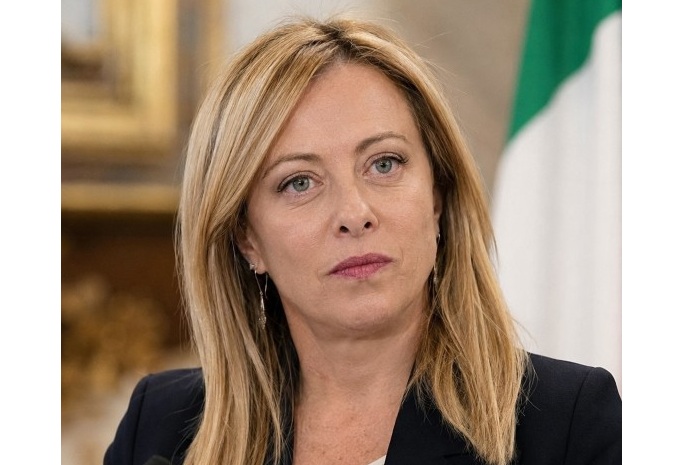
In a recent exchange of political barbs, Italian Prime Minister Giorgia Meloni strongly responded to comments made by Democratic Party (PD) Chair Stefano Bonaccini. Bonaccini had suggested that some voters supporting right-wing parties might not possess adequate educational backgrounds. Meloni interpreted these remarks as disrespectful towards the millions of Italian citizens who align with right-wing ideologies. She emphasized that political preferences are often shaped by individuals’ real-life interactions with government policies, rather than their educational achievements.
Meloni took to social media to express her views, urging the political left to prioritize understanding the electorate over judging them based on their academic credentials. She criticized certain factions on the left for their inability to grasp the reasons behind their repeated electoral defeats, suggesting that a shift in focus towards active listening might yield better results.
Stefano Bonaccini, who previously served as the governor of Emilia-Romagna and currently acts as the PD’s delegation chief in Brussels, clarified his statement, asserting that it was taken out of context. He insisted that his intention was to pinpoint the challenges confronting the centre-left, rather than to belittle or offend right-wing supporters. Bonaccini’s remarks were meant to spark a discussion on the strategic hurdles faced by his own political faction.
This incident underscores the persistent friction between Italy’s ruling right-wing coalition and the centre-left opposition. The exchange of words between Meloni and Bonaccini reflects the broader political divide in the country, where both sides struggle to connect with and understand the motivations of the other’s voter base. As the political landscape continues to evolve, such dialogues highlight the importance of addressing the root causes of electoral shifts and building bridges across ideological divides.