
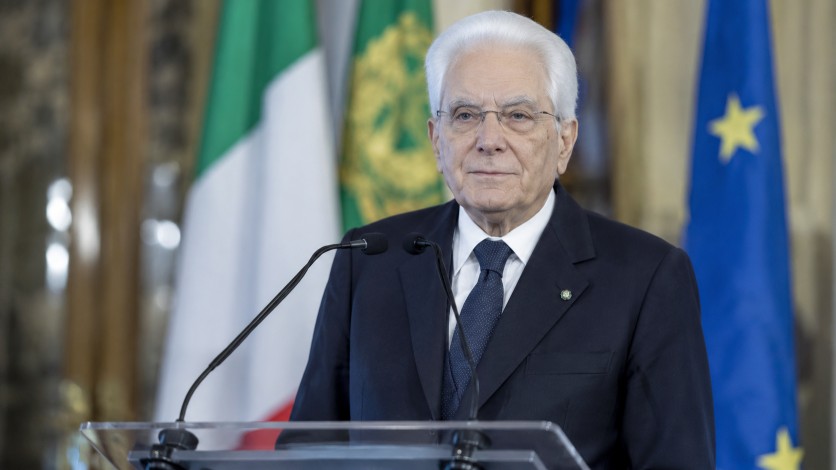
In a recent meeting, Italian President Sergio Mattarella addressed the issue of presidential powers concerning the granting of pardons, emphasizing that this authority is exclusively his, as outlined by the nation’s Constitution. This clarification was made during a discussion with Justice Minister Carlo Nordio, following a controversial case that has stirred public and political debate across Italy.
The case involves Mario Roggero, a 72-year-old jeweler who was sentenced to 14 years and nine months in prison. Roggero’s conviction stems from an incident in 2021 when he fatally shot two robbers and injured a third as they attempted to flee after robbing his shop. Recently, Italy’s Supreme Court upheld this sentence, rendering it final.
In response to the justice ministry’s initiation of pardon proceedings for Roggero, Mattarella reiterated the Constitutional Court’s 2006 decision, which clearly states that the power to grant pardons rests solely with the President. This assertion comes amid calls from several lawmakers and senior officials within the ruling coalition, urging that all legal avenues be explored in relation to Roggero’s case.
Mattarella’s statement underscores the importance of upholding constitutional mandates and the separation of powers within the Italian government. The ongoing discussions reflect the broader societal and political tensions surrounding the case, as various stakeholders weigh in on the appropriate course of action.
As the debate continues, the situation highlights the delicate balance of authority and responsibility within Italy’s justice system, as well as the significant role the President plays in such critical legal matters. The outcome of this case may set important precedents for future decisions regarding presidential pardons in Italy.