
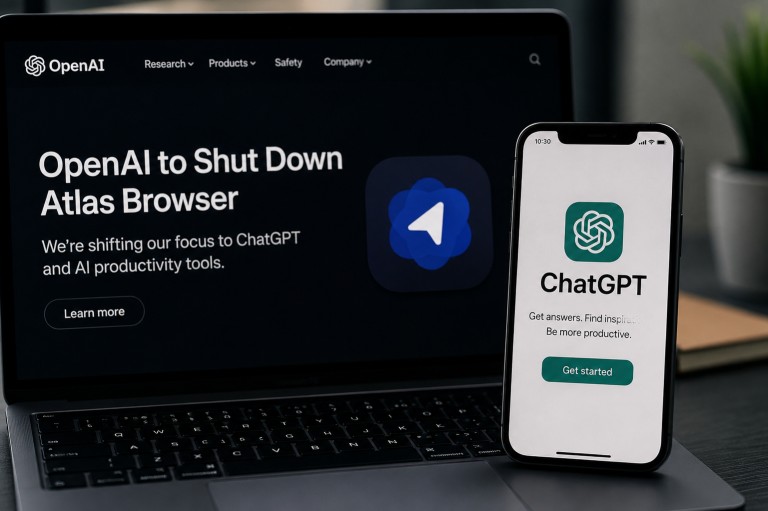
OpenAI has announced the cessation of its AI-driven web browser, Atlas, with plans to shut down the service on August 9. Instead of maintaining a standalone browser, the company intends to focus on integrating Atlas’ key features into ChatGPT and other AI productivity tools. This strategic pivot is aimed at enhancing OpenAI’s core offerings by embedding AI capabilities into widely used applications.
Insights from Atlas have significantly influenced OpenAI’s vision for AI-assisted browsing. As a result, many of these capabilities will be integrated into the ChatGPT app. OpenAI has also launched a ChatGPT extension for Google Chrome, enabling users to analyze webpage content, generate summaries, provide context, and assist with more extended automated tasks. Despite these new tools, OpenAI clarified that they will not serve as direct replacements for Atlas, highlighting a shift in focus towards workplace productivity and AI agents.
Meanwhile, Google’s Chrome continues to dominate the web browser market, solidifying its position with AI enhancements such as Gemini integration, AI-assisted browsing, and AI-powered search features. These updates have fortified Chrome’s market presence, allowing users to benefit from AI advancements without the need for a separate AI browser.
OpenAI’s decision to discontinue Atlas underscores a broader strategic goal to prioritize its core AI products and services. By embedding AI functionalities into established platforms, OpenAI aims to compete with market leaders, offering users enhanced productivity tools without the necessity of a dedicated browser.